Reference
Visual field guide
These diagrams collect the book's recurring decisions. Use them while drafting, discussing a problem, or diagnosing a revision. Their order is an editorial teaching method, not a new rule of law. Each diagram has a text explanation so its meaning does not depend on color or on seeing the image.
Figure 1.Five decisions behind a useful citation
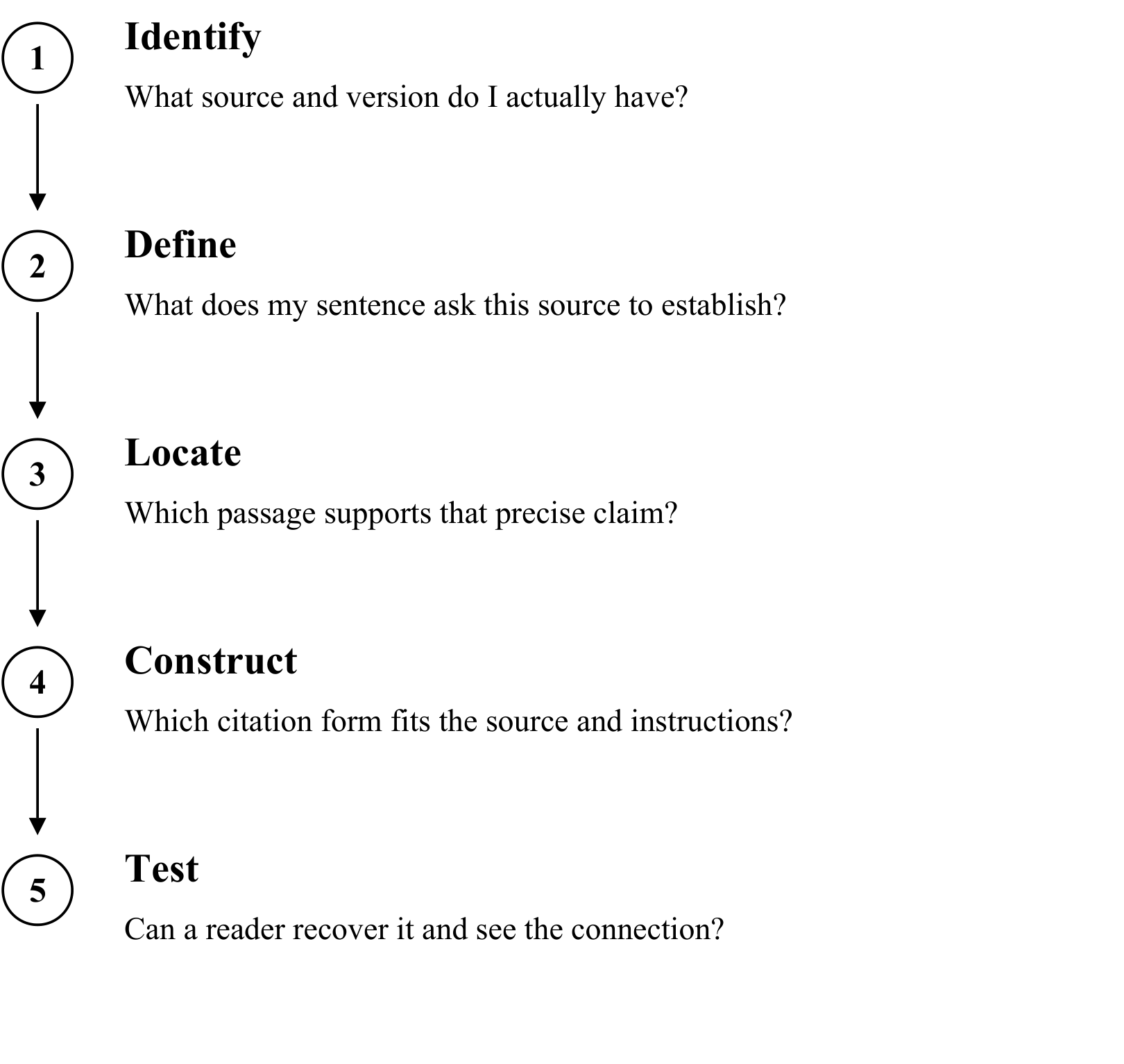
- 1IdentifyWhat source and version do I actually have?
- 2DefineWhat does my sentence ask this source to establish?
- 3LocateWhich passage supports that precise claim?
- 4ConstructWhich citation form fits the source and instructions?
- 5TestCan a reader recover it and see the connection?
Start with the material actually in front of you, then state exactly what the sentence needs to establish. Find the relevant passage before choosing the final form. Test the result by reading the sentence and citation together. When the evidence does not support the sentence, revise the sentence or continue researching. A change of signal cannot supply missing support. See Chapters 1, 3, and 17.
Origin: Original teaching organization; chapters1–17.
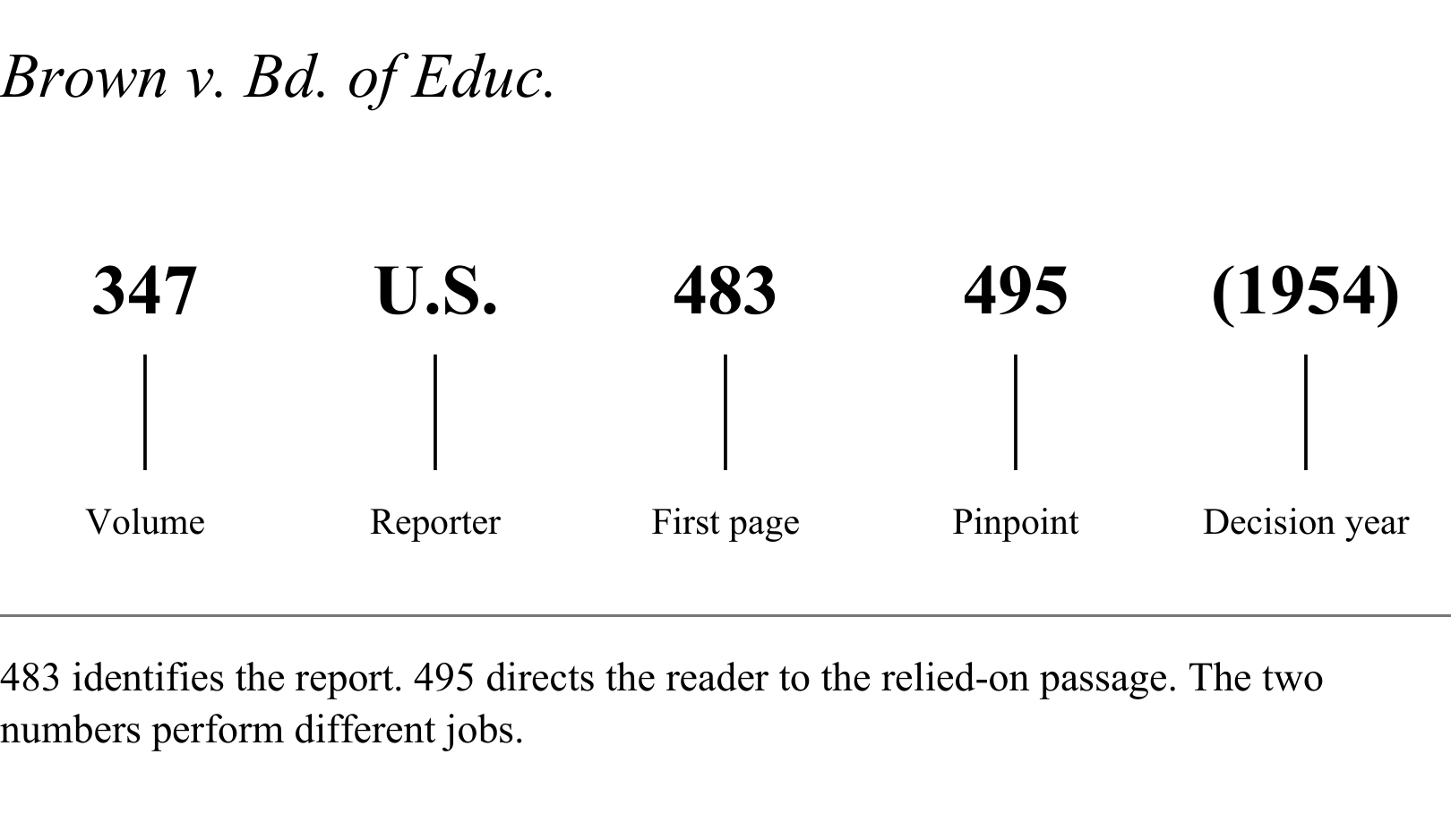
Figure 2.One citation, several different jobs
- 347
- Volume
- U.S.
- Reporter
- 483
- First page
- 495
- Pinpoint
- (1954)
- Decision year
The complete model is Brown v. Bd. of Educ., 347 U.S. 483, 495 (1954). The volume, reporter, and first page identify the report; the pinpoint identifies the relied-on page. In this model, U.S. identifies the Supreme Court reporter, so the parenthetical needs only the decision year. The inspected page supports the particular education holding taught in Chapter 1; the citation's shape alone does not prove a broader claim. Chapter 5 develops full case citations and their exceptions.
Origin: Original diagram of the inspected Brown example; EX-001 and chapter1.
Figure 3.Keep the claim inside the passage
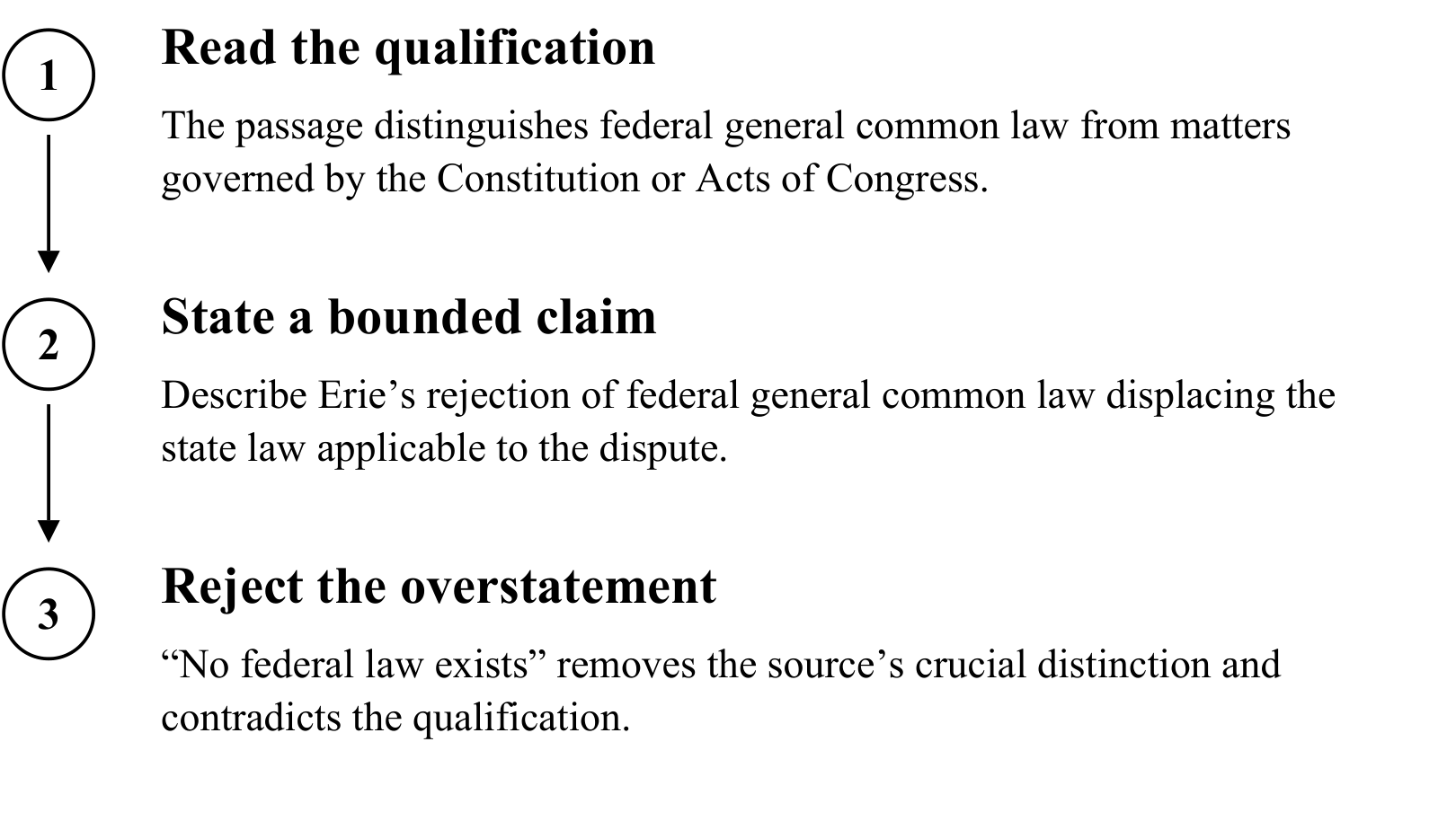
- 1Read the qualificationThe passage distinguishes federal general common law from matters governed by the Constitution or Acts of Congress.
- 2State a bounded claimDescribe Erie’s rejection of federal general common law displacing the state law applicable to the dispute.
- 3Reject the overstatement“No federal law exists” removes the source’s crucial distinction and contradicts the qualification.
The key distinction is substantive. The inspected majority at page 78 discusses federal general common law and expressly recognizes matters governed by the Federal Constitution or Acts of Congress. Removing “general common” changes the claim. Calling the source's actual disposition a holding may be defensible after reading its context; calling an overstatement a holding does not cure it. See Chapter 3 and Solution 3.6. Source: Erie R.R. Co. v. Tompkins, 304 U.S. 64, 78 (1938), with surrounding majority discussion.
Origin: Original analysis of Erie,304U.S.64,78(1938), with surrounding majority context; chapter3 and new Erie verification.
Figure 4.Three times a citation must keep distinct
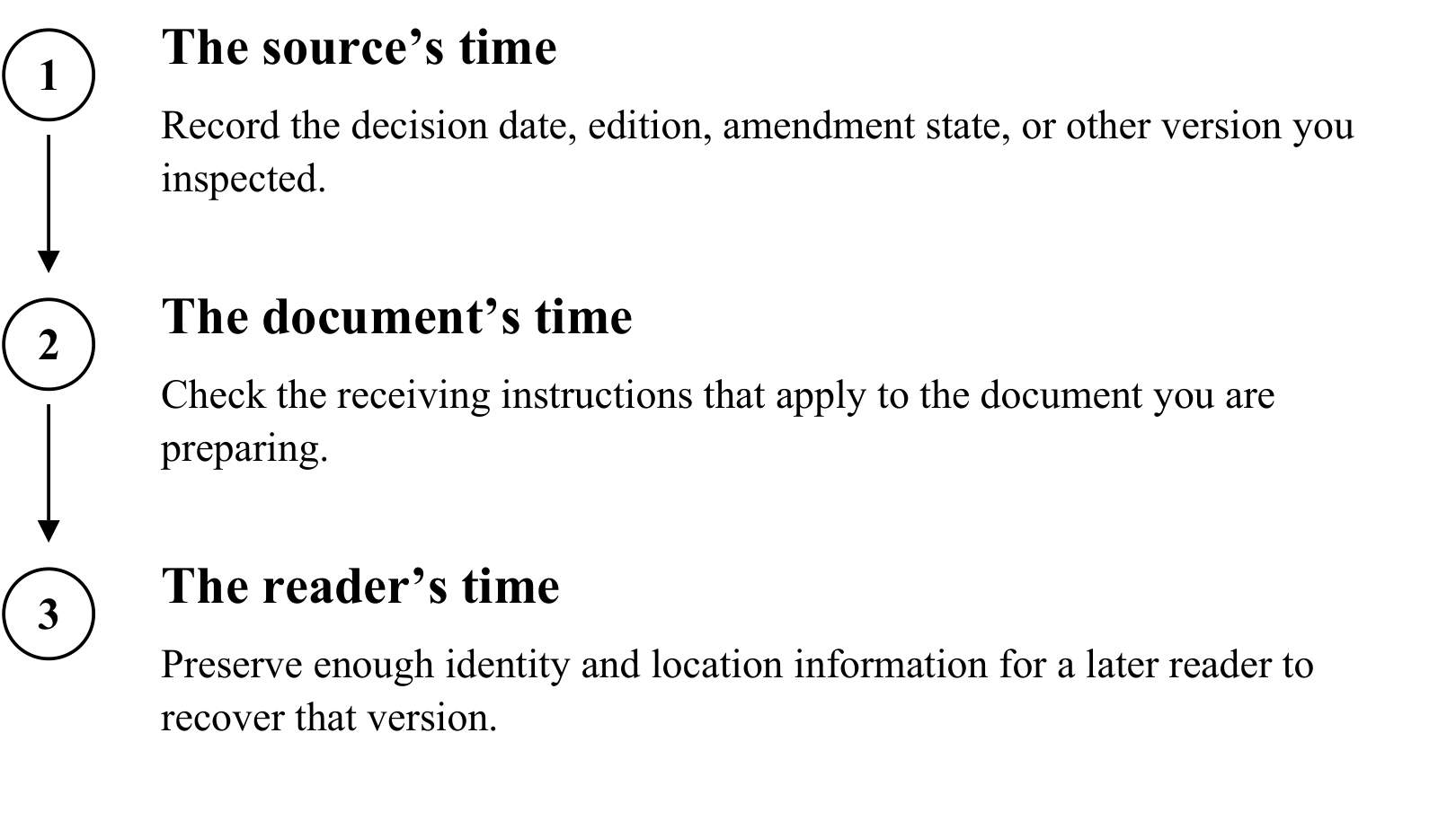
- 1The source’s timeRecord the decision date, edition, amendment state, or other version you inspected.
- 2The document’s timeCheck the receiving instructions that apply to the document you are preparing.
- 3The reader’s timePreserve enough identity and location information for a later reader to recover that version.
An old decision may be the exact historical source an argument needs. A recently retrieved webpage may still reproduce an old code edition. An archive preserves a version without proving that version governs today's issue. Record those differences instead of treating the download date as a substitute for publication or effective-date information. The diagram is a research workflow, not a command to print three dates in every citation. See Chapters 10, 12, 15, and 23.
Origin: Original editorial workflow; chapters7,10,12,15and23. Not a universal date-format rule.
Figure 5.Identify whose words carry the proposition
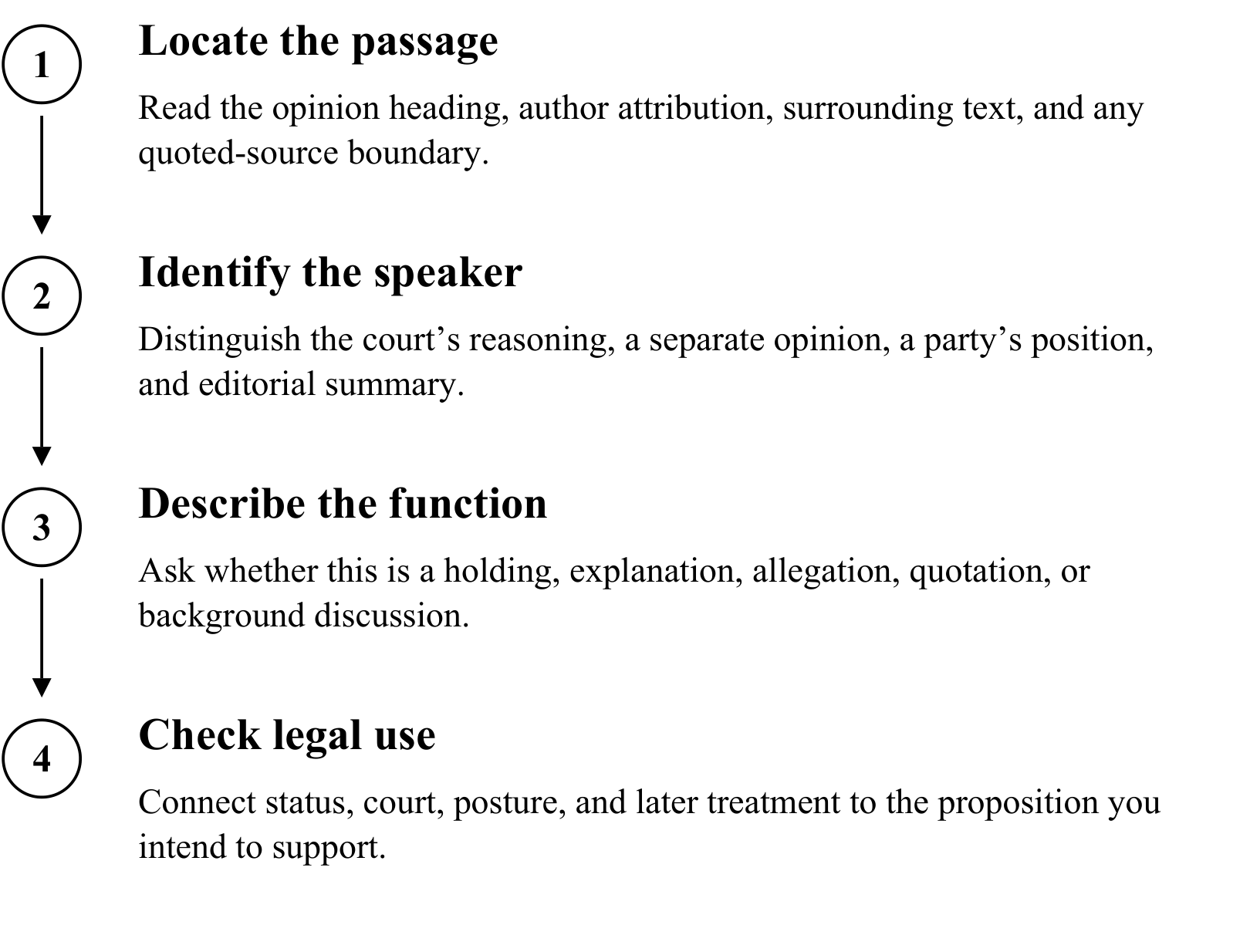
- 1Locate the passageRead the opinion heading, author attribution, surrounding text, and any quoted-source boundary.
- 2Identify the speakerDistinguish the court’s reasoning, a separate opinion, a party’s position, and editorial summary.
- 3Describe the functionAsk whether this is a holding, explanation, allegation, quotation, or background discussion.
- 4Check legal useConnect status, court, posture, and later treatment to the proposition you intend to support.
A useful quotation may appear in a dissent, a party's argument, or the court's quotation of another source. Its location inside an opinion does not automatically make it the court's holding. Read the boundaries and attribution, describe the reasoning accurately, and then assess how the authority may be used in the receiving legal system. See Chapters 1, 3, and 8. This workflow does not replace research into subsequent treatment.
Origin: Original reading workflow grounded in chapters1,3and8; it does not determine precedential force by itself.
A revision log that teaches the next attempt
Keep a short log while using the workbook. The useful entry names a decision and an observable correction. “Be more careful” does not tell you what to do on the next problem. “Compare the cited page with the sentence's specific deadline before adjusting the signal” does.
| Decision | What to record after a correction |
|---|---|
| Source identity | The source type, speaker, or version you initially misidentified and the evidence that fixed it. |
| Proposition support | The words in your sentence that exceeded, changed, or failed to match the inspected passage. |
| Location | The page, paragraph, section, footnote, or record designation needed to reach the support. |
| Citation form | The particular component or convention corrected, with the applicable instruction. |
| Document context | The receiving requirement, prior citation, procedural posture, or attribution that changed the answer. |
Use the same five categories for peer discussion: point to the source or instruction, explain the defect, and propose a repair. An unresolved source question belongs in the log with the research still needed. It should not be converted into a confident answer for the sake of finishing the worksheet.